Feeds:
Posts
Comments

Posts Tagged ‘tower hamlets’


I can’t decide if this is clever or whether it makes me slightly uncomfortable. It has the feel of one of those dodgy email scams about it.

Read Full Post »

SEE VARIOUS UPDATES AT BOTTOM OF THIS POST:

The Guardian’s Dave Hill joked yesterday that the poison of the Tower Hamlets elections had yet to include the ritual allegations of vote fraud.


I think Lutfur’s camp must have been glued to Dave’s Twitter timeline. For, on cue, less than 24 hours later this Tweet appeared this afternoon from the account of Lutfurite Cllr Oliur Rahman:

photo

There are two Labour councillors in the Lansbury ward: Shiria Khatun and Rajib Ahmed. Because he named neither, Oli, in one fell swoop, defamed both. In libel law, his only hope would be if one of them had actually been arrested. When this was explained to him, he deleted the tweet.

In fact, I can say with certainty that Oli was referring to Shiria Khatun. And when Oli said in his Tweet, “just been told”, I confidently understand the person he was referring to there was none other than the Deputy Mayor, Cllr Ohid Ahmed, who is also standing in Lansbury. (See update below.)

The problem for them is that Shiria has not been arrested. As this tweet came through, she was out campaigning.

She is incandescent that such the smear is being spread among the voters of the Lansbury ward. She believes Tower Hamlets First is so worried about the outcome on May 22, they’re resorting to lies that could well see one or two of them in hot water.

shiria khatunI’m told that in 2010, rumours were spread (by whom, I don’t know) that Shiria was not a Muslim because she does not wear a hijab. These are some of the depths Tower Hamlets politicians plumb, on almost all sides.

I understand today’s matter has been referred to the Returning Officer, who surely now must show he’s taking these things seriously.

Did Ohid tell Oli that Shiria had indeed been arrested? He declined to tell me.

However, this is what he did say: “I’m personally against all sorts of voting fraud. I have campaigned against it and requested no candidate should be handling/harvesting postal votes. However, very unfortunately this has happened in my ward, I was told. I understand this has been reported to the police. It is up to the victim and police to reveal the name of the culprits if they find anyone involved.”

Expect more of these sorts of allegations over the next 10 days.

Sorry, Dave, it’s started.
UPDATE 8am, May 12

I’ve been told that Ohid says he was called by Oli asking if he’d heard a rumour that Shiria had been arrested, and that Ohid told him he had.

UPDATE 11.30am, May 12

Lutfur’s supporters were busy yesterday on Facebook saying that Shiria had been interviewed by police. I called Shiria. This is her version of events.

“I was knocking on doors in the Lansbury ward yesterday. I saw police in the street and I thought they’d come to talk to people about drugs problems in the area so I went over to them to say I was happy they were there. Then I saw Louise Stamp with them [from the council’s electoral services department]. They said there had been an allegation against me about faking votes. I was completely taken aback and shocked.

“I asked what’s going on. Then I saw one of Lutfur Rahman’s Ohid Ahmed’s supporters. He said he had been interpreting for an elderly Bangladeshi couple who had made an allegation. I told the police that’s not on, that he’s one of the mayor’s right hand men. The police said he hadn’t interpreted, that he was a well-wisher. But he had been in the room of their flat and I told the police they wouldn’t have been able to understand what he might have said to the couple, that he might have been influencing them.

“This elderly couple have made a formal allegation. The allegation is that I’ve taken their vote. This is a complete lie. I have not touched a single ballot and the only ballot I will touch will be mine. I don’t know this couple beyond that they are my constituents. I had previously asked them if they were going to vote.

“The couple who made the allegation have now flown to Bangladesh. I find that a surprise and some coincidence.”

Separately, the police have confirmed they have received a complaint and that they are investigating. They are also aware of the special characteristics of Tower Hamlets election time.

 
UPDATE 9.15pm, May 12

I now understand only one of the elderly couple has gone to Bangladesh and the police seem satisfied the trip wasn’t last minute.

I also gather the allegation is that blank ballot papers were taken. Shiria denies this.

It’s probable Shiria will be interviewed by police, but not necessarily under arrest. That’s standard practice when such allegations are made.

The elderly couple have also been warned that any false allegation could result in a perverting the course of justice investigation.

The police have a detective based at Limehouse examining all manner of electoral issues at the moment. That’s a good move by the police. I get the impression this more than a PR box-ticking exercise.

Tweets and Facebook postings are being particularly monitored for offences under election law.

Read Full Post »

The following, which I think is one of the best pieces to have appeared on this blog, is a guest post by TONY UDDIN.

By way of introduction, Tony is a senior pastor at the Tower Hamlets Community Church in Ricardo Street, Poplar; he hosted a mayor hustings last week when Lutfur Rahman declined to turn up. He also chairs the Tower Hamlets Night Shelter scheme (GrowTH) as well as a local youth charity, The Canaan Project. His article is a personal piece and does not represent the opinions of those organisations.

Tony Uddin

Tony Uddin

Last week saw the negative effects of interpreters in polling booths being widely reported. This gets to the heart of a crucial question. Should LBTH be spending large sums of money on providing both mother tongue and translation services?

Firstly, let me declare an interest. My father, Farid, came from Sylhet to London in the Fifties. His was a brave and courageous generation who took the risk of leaving all that they had and building a new life, in a country where they could not speak the language and where the colour of their skin meant that they instantly stood out. Were he still alive, my dad and many like him would have been righty proud but also somewhat saddened looking around at some aspects of life in Tower Hamlets today.

Although we have lot of Bengali family in the East End, my dad’s connection was not to Tower Hamlets but to London, for one simple reason: for him, coming to London meant becoming a Londoner, being part of a culture wider than just his own.

Tony Uddin

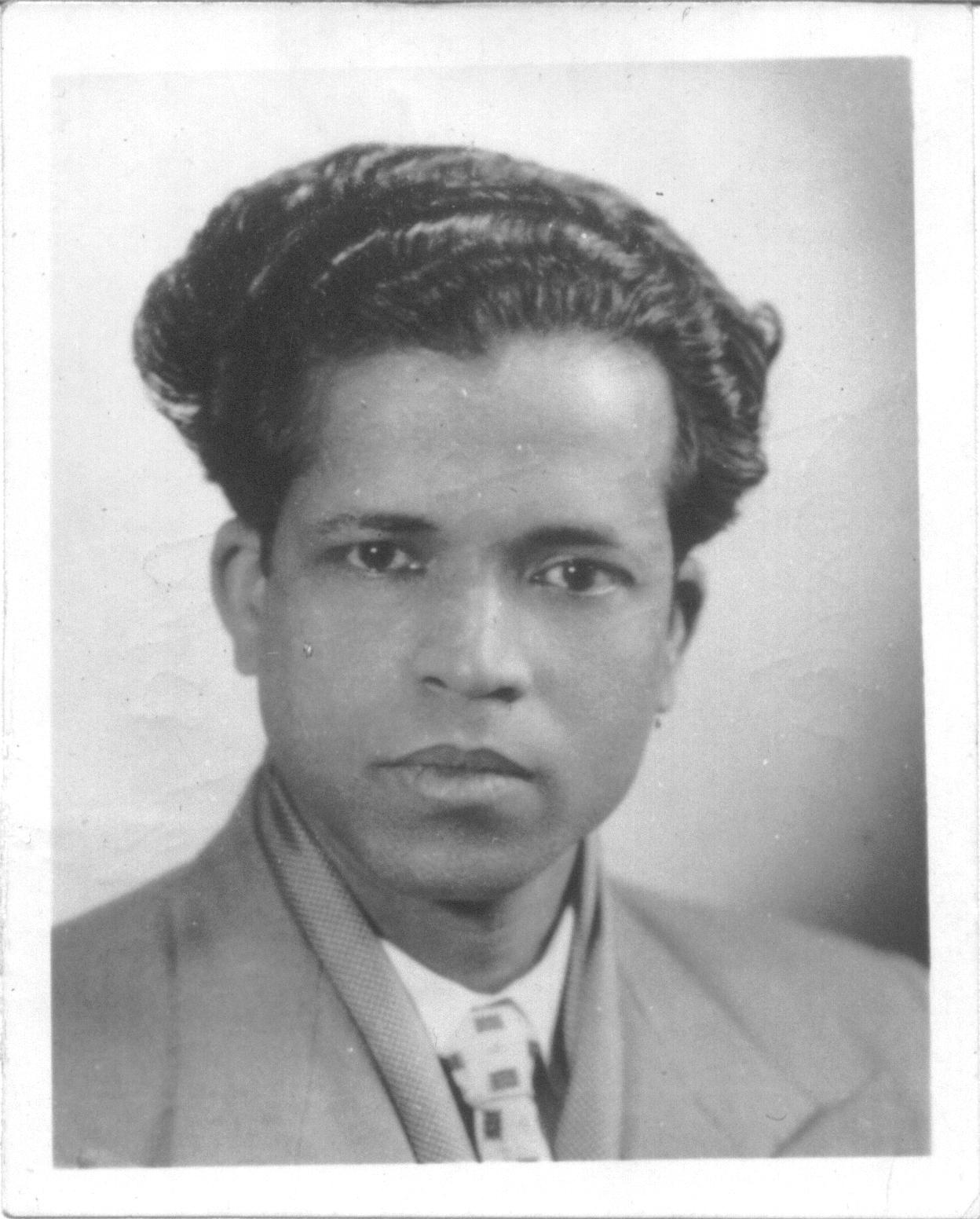
Tony’s dad, Farid Uddin, as a young man


In doing so he opened a curry house in Tooting in the Sixties, married a white woman of Scottish extraction and set about creating a life that preserved elements of his own Sylheti culture but one with a distinctively British edge to it. He saw no problem with keeping a sense of his own culture and identity whilst also integrating into British society.

In doing so he helped many other Bangladeshi people to settle into the UK and was widely respected for it. This was often at a great cost, the Britain of the Sixties was at times far from welcoming. My mother’s family for instance refused to have any contact with her because she married a Bangladeshi man and that has remained the case ever since.

My dad was fiercely proud of his Sylheti roots and yet often voiced the opinion that the translating of road signs, forms and the like into “community languages” was divisive and in the long term held people back from integrating into British society and contributing to the city that he had chosen to call his home.

For him, a strong and confident community did not need to hold others at bay but could be outward looking and would embrace integration whilst maintaining its own culture. When I got married in 1998, we were preparing to have our wedding and some of the speeches translated into Sylheti. When he heard about it, my dad told me in the clearest terms that he was against it.

Tony with his mum and dad and his wife, Anni, on their 1998 wedding day


I remember the conversation well. His point was that by offering interpretation, we were facilitating something that was not in people’s best long term interest. For him playing a positive role in society here meant people needing to learn English and being comfortable amongst people from a range of backgrounds. It meant being outward looking.

Bangladeshis (and other minorities) in Tower Hamlets have overcome tremendous opposition, outright hostility and discrimination as well as intimidation and violence. They have shown a remarkable resilience and determination to thrive.

Their greatest challenge now is to allow this strength and confidence to propel them to reject the divisive community politics of Tower Hamlets First. Theirs is a politics that relies on fear, the fear of acceptance, the fear of being outsiders.

I was desperately saddened this week to hear of people opposed to our current mayor being described as traitors. Being Bengali-British and rejecting the views of other Bengali-British because you believe them to be wrong is not a sign of treachery, but of growth, of a community that is confident.

The politics of Tower Hamlets First and their rhetoric in a strange way mirror those of Ukip and others on the right. However the community here, our community, are strong enough to reject this politics of fear and be what we really are, and can increasingly be, a great example of the positive contribution that immigration makes to London.

I’ve lived in Tower Hamlets for 18 years now. I love the diversity that surrounds us. I’m half Scottish, half Bangladeshi and am married to a German woman whose mother was born in a remote part of Brazil. My dad loved that. For him it summed up what being a Londoner meant.

As a borough we are not served well by those who want, through fear, to keep our community divided. A strong community with a confident culture can and will embrace the wider city around it, building bridges rather than walls around itself.

To get back to where we started, building a strong united community in Tower Hamlets means putting our precious  public resources into things that build a stronger sense of social cohesion. That probably means providing some translation services to help people get established, but it also means that the emphasis should be on putting money into accessible English language courses rather than mother tongue classes.

It means helping our community become stronger through investing into services and projects that facilitate people coming together and creating common ground rather than those that allow them to exist in close proximity to one another yet in very separate worlds.

Read Full Post »

This is probably a little bit cheeky of me but I’m sure The Guardian’s Dave Hill will understand that copy and paste is, digitally speaking, the sincerest form of flattery.

I’m going to reproduce here his two very interesting and lengthy interviews with John Biggs and Lutfur Rahman, whicht he published last week.

I’m told on pretty good authority that Lutfur wasn’t at all happy with the Biggs piece (which is good and measured) and that it was part of the reason he pulled out of yet another debate with the Labour man on a Bengali TV station on Friday night, this time ATN Bangla.

Dave’s interview with the Mayor is also good and Lutfur comes across well in his opening answers. He’s confident on his well practised turf, on issues such as housing. But when he’s put under questioning on the more controversial stuff, he flounders…just as he did with John Ware in the Panorama programme. It’s something that I’ve noticed time and again in the years I’ve known him: he’s just not quick on his feet. I think this is the real reason why he limits his risk for on the spot public scrutiny in debates and at council meetings. I think he lacks confidence in himself, weirdly. He’s not a great public speaker.

What’s missing from both interviews, frustratingly, is the issue of racist accusations. Dave doesn’t really probe either candidate on this, despite it being the main line of attack against Biggs from Lutfur’s camp on the doorstep. I understand from Dave he’ll be addressing this topic in a future piece.

As I warned these pieces are long, so I may be wrong to publish them together, but hey, it’s a Bank Holiday weekend and Liverpool don’t play until tomorrow night…

Here’s the Biggs interview:

The main challenger to the East End’s independent mayor makes a trenchant yet measured case against the way the Town Hall in distinctive part of London has been run

The first time Tower Hamlets voted for an executive mayor, in October 2010, the Labour candidate Helal Abbas was heavily defeated by his independent rival Lutfur Rahman. This time the contest could be much closer.

Four years ago, the mayoral ballot took place in isolation. This time, it will be held on the same day as the votes for borough councillors and members of the European parliament. This should produce a much higher turnout, which, according to orthodox opinion, would help Labour’s 2014 candidate John Biggs. Tower Hamlets politics, though, are nothing if not distinctive.

I spoke to Biggs for around 90 minutes last week, initially at a nice but rather noisy cafe near Bethnal Green’s Museum of Childhood and then at the Labour Party office on Cambridge Heath Road. Aged 56, he’s an experienced politician who became a Tower Hamlets councillor in 1988 and led Labour in opposition from 1991-94, a period when the council was run by a controversial Liberal Democrat administration, which Biggs wryly characterises as “a sort of bolt-hole for the League of Cockneys”.

It was during this period that a BNP candidate won a by-election in the borough. “It was quite a rough time,” says Biggs, who led Labour to a huge win in 1994 only to be deposed as leader by fellow Labour councillors the following year. But he plays down the borough’s enduring reputation for political viciousness. “It’s not that bad here, really,” he says, perhaps surprisingly.

Biggs grew up in Barnet, studied chemistry at Bristol University, and then moved to the East End which, he says, “politicised and energised” him. He went on to work as a financial analyst in the City of London. Since 1990 he has represented Tower Hamlets, along with Newham and Barking and Dagenham, on the London Assembly and he is deputy leader of the Labour Group at City Hall.

Our conversation covered housing, employment, schools policy, how politics and religion should co-exist, fostering harmony in a diverse and largely poor part of the capital, building an ‘outward-looking’ attitude among the borough’s people, and the repeated allegations made against Rahman that he fosters a culture of favouritism towards his fellow Muslims with the help of questionable friends. Some of Biggs’s views may surprise. Now read on…

Dave Hill: Is Tower Hamlets a badly-run council?

John Biggs: By and large, no. In its day-to-day services it’s not catastrophically bad. It’s quite good in a number of areas – education’s improved massively over the years, though that’s been a 20-year journey. No individual mayor or leader can take credit for it. There are a number of areas where there is anxiety. One is that this area is going through massive change. A lot of that is about property development and demographic change. The price of land is going up and people are being squeezed out.

The other thing that sits alongside that, and has done for over a century in East London, is the way in which different communities work together, which can sometimes be a cause of tension. Quite often external people will stir things up, whether it’s Oswald Mosley or the BNP or George Galloway. But people come to East London because they’ve got a hunger to get things done and they feel quite often that they are competing for opportunities with other people. So what is needed is a leadership here that understands that and is seen as fair. And the big problem we have here at the minute is that the council leadership is not seen as being above the sometimes divisive inter-community competitiveness.

Has the running of the council deteriorated under the current mayor?

My fundamental critique of the current mayor is that he’s so preoccupied with little things and with his own insecurities that he’s not offering the leadership the council needs. We have a number of problems, which need to be sorted. One is that the senior management team is very unstable here. Because of the stand-off between the [independent] mayor and [majority Labour] councillors there’s been a failure to appoint permanent staff. Another is that the signals coming out from the politics discourage good people from applying for jobs here.

We’re at risk of playing a kind of lowest common denominator politics, with the mayor, because of his insecurities, playing to his core vote. His people are interpreting that point as me in some way trying to divide people, but I think it’s them doing the dividing. And if you knock on doors around here I think you’ll find people feel that the council isn’t standing up for everyone. I’m part of a party that is deeply rooted in all the communities in East London, in terms of socio-economic groups and ethnic groups. I think it’s very important that we reach across and provide some kind of united leadership. I’m aware that that can sound like a nicey-nicey soundbite, but it is actually crucial to getting the area to prosper.

Your manifesto implies that Lutfur Rahman hasn’t done enough to help young Tower Hamlets people secure Olympic-related jobs. What should he have done and what could you do better?

There’s a whole lot of things that sort of hang off that, but one is that the borough left to its own devices can be a very inward-looking place and the politics can become very E1-focussed – the City fringe area, Spitalfields, Brick Lane, Whitechapel, the big mosques and so on. But the borough consists of E1, E2, E3 and E14, basically. So the east of the borough can become quite neglected and that’s where the Olympics were. The community politics can become so inward-looking too that people can forget they are sitting on the doorstep of the biggest city in Europe and so many opportunities. So it’s about the inward versus the outward-looking perspective.

Tower Hamlets was the only borough where unemployment rose during the Olympic games. You could blame everyone but the mayor for that, but it was on his watch so you’ve got to ask what he could have done that might have made a difference. There was an initiative to promote Brick Lane as the Curry Capital, but the amount of business in Brick Lane went down during the Olympics. Now, there was a pattern across London where people were busy watching sport instead of stuffing themselves in eateries but even so everything sort of happened in spite of Tower Hamlets rather than alongside Tower Hamlets.

We have an enormous advantage here compared with other parts of the country where there is high unemployment, in that there are so many jobs around. There’s a whole lot of good reasons why people might not be working – lack of skills, lack of language skills, childcare difficulties, health issues and so on – but brokering the sorts of skills that will improve people’s employability is one of the key things we haven’t done enough of.

We have an organisation called Skillsmatch but Robin Wales in Newham has Workplace, which is bigger and better. If you talk to the corporates – who are all very polite people and who want to get on with the mayor whoever he is – Lutfur seems to want to do things that involve having his photograph on them but aren’t really partnerships. Many people seem angry that the mayor wants to have his picture everywhere – they’d like fewer images and more action. And that’s what I would provide. I have the intrinsic advantage of being ugly, of course. But the point is it doesn’t bloody matter what your mayor looks like. What you want is to have your bins emptied and your kids in jobs.

You talk in your manifesto about the need for more school places in the borough. Free schools are about the only game in town just now. Are you going to encourage them?

I don’t like the free schools programme as a principle because it enables opting out of the co-ordination and planning that’s required to make a complicated area work. You can end up with free schools that have two percent free school meals in an area where 20% of kids qualify for them. But with the school leaving age rising to 19 there may be real opportunities to have free schools which provide specialist niches for kids who maybe aren’t going to follow an academic course but could do well at other things. There’s lots of young people who are really switched on by music, for example, which can help them acquire skills in other areas too. So as mayor I’d want to hold useful free schools close, if they want to be held close, and create a situation from which both sides benefit. As with academies we shouldn’t get too transfixed with the structures and we should think more about the partnerships we can build.

You say you want to build 1,000 new council homes. How would you achieve that and over what time period?

There’s a limited amount of available publicly owned land in the East End, but there’s still quite a lot of it. We think that without creating problems on existing housing estates and by using other land we could build about 1,000 homes over the next decade. Within the first four years we’ll identify where they are going to be and should have built several hundred of them and know where the rest are going to go. We think providing council housing should be part of the offer and the current mayor has failed to do this.

He’ll boast about the Poplar Baths deal and one or two others, but they are very clumsy deals. We think he could have put more effort into it. He boasts about 4,000 affordable homes being built, but they’ve been built by private developers and are the skim off, if you like, as part of the planning consent. Not only were they happening in spite of the mayor, but a lot of them are affordable only according to the Mayor of London’s definition, which is actually unaffordable even for teacher couples, for example.

It needs the mayor to do some thoroughly boring stuff, which is to sit in the Town Hall, not having his photograph taken, roll his sleeves up and actually think about the bloody policy in order to broker the best possible deal for local people. We need to look at all these other ways of making our housing more accessible including to some people on middle incomes. To an old child of the sixties like me, that sounds outrageously pragmatic but that’s also the world we’re living in.

Do you mean assisting the middle-classes with subsidy? How scandalous!

I think helping aspiring people on to the housing ladder, there’s nothing wrong with that. But if you look at travel patterns in London you’ll find that the long distance bus routes like the 25 or the 149 are packed with cleaners in the early mornings because they can’t afford the train fares and they can’t afford the housing in central London like they used to be able to.

Your manifesto talks about stopping the over-commercialisation of the borough’s public spaces. Can you elaborate on that?

One of the bugbears is Victoria Park, with people who live up there feeling they are overburdened with late-night, under-regulated events. Clearly, you’ve got to raise revenue from your open spaces if it helps to cushion your budgets. But you’ve got to get the balance right, and there’s a perception up there that money is raised in the park yet not spent in the park.

And I read that you intend to stop the council charging people for pest control services.

One of the problems if you start charging people for dealing with their mouse infestation is that poor people will stop getting it done. Again, how do you get the balance right on that? These are the sorts of things we need to think hard about.

Is the Mayor’s educational allowance – his version of the educational maintenance allowance – a bad policy?

EMA was a good policy of the Labour government and if we can find ways of replicating it, then we should support those. Lutfur Rahman has done that, though with the help of Labour councillors. I would like us to do it and more effectively, but over the next few years we have some pretty horrendous cuts coming, regardless of who the mayor is – about £80m. So I don’t think you can guarantee anything. But one of the fundamental principles of a Biggs administration should be a series of policies challenging some of the problems of inequality and lack of income. They could include helping people in their relationships with private landlords, skills advice, and providing free school meals for primary school kids. It’s about the mix and you can’t do everything. You can’t have the penny and the bun, as someone once said.

The mayor has been criticised for promoting himself through the council’s free newspaper East End Life, but he’s not the only mayor to do that. A recent Newham Mag is packed with pictures of Newham’s Labour mayor, Sir Robin Wales.

Robin’s a mate of mine but I’m not his cheerleader. He can look after himself. I’m very clear that the role of a council newspaper is not to promote the mayor or the leader of the council but to inform people about the services they can access through the council. I find offensive the idea that you should use council money to provide propaganda on the rates.

The recent Panorama programme about Mayor Rahman focused on his allocation of grants to local organisations, alleging that he’s favoured Bengali and other Muslim groups in order to benefit politically. He’s countered that he’s spent the money where the need is greatest. What principles would inform how you allocated that part of the mayor’s budget?

What we’re talking about is grants for adding value in the community, doing things the council can’t do itself. Those should all be about improving the capacity of people to get on with their lives. It’s about doing the things that help to support a strong civic society in the borough. In a multi-faith, multi-ethnic community everyone who gets a grant must buy into the principle of community cohesion, which doesn’t mean they have to be totally secular – I don’t agree with Robin’s approach on this – but people do need to understand the importance of being outward-looking in a borough like Tower Hamlets and not creating inward-looking bunkers, whether they are ninth generation cockneys or fourth generation Bengalis.

I think Lutfur has taken too much of a micro-managerial interest in the grant-making decisions. When you look at the amendments he made [to the advice of his officers] I don’t think he has ever properly justified them. It is the right of a mayor to make such changes, but when a mayor has that power there is a potential to abuse it and I don’t think he has answered his critics.

Certainly I have come across organisations who have been reluctant to talk to me because they think they might not get a grant as a result of being seen to be too close to someone who disagrees with the mayor. Certainly there have been luncheon clubs across the borough, which have been presided over by the mayor’s councillors and seem to be working on a sort of reward-and-punishment basis in the way in which they hand out their meals to elders. There seems to be an unhealthy focus in some of those decisions.

The council should be about providing services to people without favour. I think he’s got a case to answer. I don’t want it to become personal and I don’t want it to become racially polarised either. But there are quite a lot of poor white people in the borough. There are certainly a lot of poor Somali people and a great number of poor African people. There’s quite a lot of poor older people on limited pensions and with a very limited support network.

You could bring all this down to an absurd level and say, well, we’ve got ten lumps of money and 30% of the people here are Bengali so they must have three of the ten lumps and so on. That would be wrong too wouldn’t it?

You raise an important point and, yes, that would be wrong but not necessarily completely wrong because not only do you need to have an approach which is transparent and justified, it also needs to be seen to be fair. I spoke to a pensioners’ group in Bow, which is predominantly white, and they do get a grant, but they look covetously down the road at what they perceive to be the grants received by other people. Now, I think there’s a certain amount of disinformation there. But the perception of unfairness is very real.

Is it possible to define principles and clear criteria for grant-giving and, if so, what should they be?

The principles need to be about what the basic purpose of the services is, and it’s about helping to provide the glue that helps make strong communities. All communities should recognise that they need to be outward-looking as well as supporting themselves. I’m very clear that Bengali elders will tend to stick together – they have kinship, memories, language and so on, and that’s perfectly reasonable. We shouldn’t force people to have a multi-racial luncheon club, though it would be great if there were more than we have at present. But that doesn’t mean we should be facilitating ghettoisation.

I think we have a duty in London, in the UK, in a multi-faith, multicultural community to try to tie people together, recognise common interests, provide coherent leadership and create a very strong sense of fairness and that we’re looking after everyone. Lutfur shows a misunderstanding of his role. He’s created a culture in which people are looking over their shoulder, wondering what they need to do to please the emperor.

You have some thoughts in your manifesto about the management of Brick Lane. There’s been plenty of rubbish written and broadcast in recent years describing Tower Hamlets as an Islamic Republic or claiming that no white person dares to walk down Whitechapel Road in case some mad mullah attacks him, yet Brick Lane on a Friday night is full of people boozed up to the eyeballs.

Well, Tower Hamlets is not full of mad mullahs and all people, I think, can feel safe walking down the streets apart from those who represent a threat to the rest of us. The Brick Lane area up into Shoreditch has become one of the three night time hotspots in London, alongside the West End and the Brixton area. There’s a lot of trade there, a lot of potential, a lot of money’s being made. A lot of it is very pleasant and enjoyable. But there are problems with uncontrolled street drinking and people pissing in doorways, which causes massive offence. It needs proper Town Hall management and better partnership with the police.

The other thing about Brick Lane is that it’s still seen as the heart of the Bengali community. You’ve got the Brick Lane mosque, you’ve got the curry trade, you’ve got some lovely cafes down there. It’s being squeezed by the rising rent levels. Also, if we’re going to have a thriving curry business there, some of it needs to be better than it is at the moment.

If we’re going to retain Brick Lane as the heart of the Bengali community, in the way that, say, Chinatown has maintained some character, then it needs a lot of long, hard talking about how we sustain that in the context of ever-rising property prices. We need to give the curry business some support, and the current council has done very little about that. The mayor talks about it, but it needs some disciplined leadership because the traders themselves often have difficulty reaching agreement. It’s a big piece of work, but the community feels strongly about this and we need to see what we can do.

Why do you think Lutfur Rahman has been a successful politician? Why do people vote for him?

He very successfully managed to position himself in 2010 as a victim in a contest with a low turnout that looked like a contest between two Bangladeshi factions in which the rest of the community didn’t have much interest. Plus a lot of people, I think, didn’t realise how powerful a mayor could be.

You’ve said to me before that you recognise that plenty of voters here in Tower Hamlets see him as their champion, a success story they can call their own. And doesn’t he seem to be sticking up for them in a wider context where the media is full of stories about sinister Islamist plotters and when certain politicians are busily assertingfor electoral gain that this is a Christian country? Isn’t that part of why people voted for him in 2010?

We need to have a values-based political system. I don’t think that religious affiliation should form an important part of that in what is, essentially, a secular community. The story of Bangladesh is a story of secular struggle against the oppressive Pakistani government in support of peoples’ right to develop their language and so on. So the religious argument, in my view, is a red herring other than in terms of the values of mutuality and respect. I live by very strong Christian values, even though I’m not an active Christian. And I think those values are pretty universal, actually.

But his success is symbolic of something, isn’t it? And he has some good principles, doesn’t he?

Yes, I’m sure he has. And it’s very lazy politics to say, you know, Margaret Thatcher will steal your children and sell them into slavery, or that Lutfur Rahman will convert the borough into an Islamic Republic. All that sort of rubbish. And it is rubbish. From what I know of Rahman, he’s a pretty secular guy. He has formed affiliations with people who are not very secular, and I think that’s a little bit suspect because I think that, while respecting peoples’ faith and their particular values, he needs to say it shouldn’t be part of the deal here, you’ve got to subscribe to something bigger. Everyone goes through the motions of that, but some organisations don’t really follow it to the letter.

Our community in Tower Hamlets is a pretty secular community, in which people knock around together pretty well. I think within the Muslim community there is anxiety about Islamisation and the risk of it. I think we should be alive to that, but I wouldn’t want to overstate it. I will hopefully win the election and reassert strong secular values in an administration which nurtures and supports and encourages our strong faith communities but also creates greater cohesion. We won’t be tolerant of groups who seek to divide. Rather than any Islamisation of the council, I think there has been political opportunism in which people have turned a blind eye to some of the more questionable practices of some people affiliated with some religious groups. And I think a lot of people in mosques would agree with me on that.

One influential organisation based in Tower Hamlets, the Islamic Forum Europe, is frequently described by some people extremist. Is it?

I remember a meeting on one of Ken Livingstone’s campaigns with a bunch of people from IFE and one guy opened a briefcase and took out a list and said these are our members and each of them will be expected to bring out 20 voters in support of you, Ken. Now, if I was a conspiracy theorist who thought the country was being Islamised I would see that as evidence of people wanting to build an Islamic Republic. But I don’t think it was anything of the sort. I really don’t.

Imagine you’re a young Muslim person growing up in a predominantly Christian country. Your parents came here with all sorts of expectations, some were fulfilled, some weren’t. There’s a struggle for identity in a complicated world. I see the IFE at its core as being a forum where people can share ideas and understand the relationship between their faith and their role in society.

Just as monks did years ago some people may conclude that they should withdraw from society and become exclusively devoted to their faith but most will find a pragmatic accommodation between their faith and their values and the way in which they get on in society, bring up their kids and so on. A forum is not a re-education camp. There are doubtless people affiliated to the IFE who’ve got other agendas. But I think predominantly it’s not an organisation that’s trying to take over the world. 

Why should Bengali voters here, many of them very politically engaged, vote for you rather than for Lutfur Rahman?

Because I’m a Labour politician committed to respecting communities, faiths, and diversity, but also part of the mainstream, which is what people came here to be part of. I’m a respectful, decent bloke who’s got a track record for delivering and I will roll my sleeves up and get on with the nitty gritty of providing opportunities and school places and trying to challenge the rough edges of the housing market, rather than getting preoccupied with some of the niche issues that have preoccupied so much of Lutfur Rahman’s administration.

And here’s the piece with Lutfur:

The East End’s independent mayor seems permanently embattled yet has a history of thriving on it and he defends both his policies and his administration’s culture vigorously

London’s East End has a turbulent political history and Lutfur Rahman’s mayoralty forms the latest chapter of it. Born in Bangladesh but raised from an early age in the borough he has led since 2010 as its executive mayor, he is the most probed and denigrated local authority leader in the land.

The decision last month by communities secretary Eric Pickles to send inspectors in to the Town Hall to look at the council’s books, following a BBC Panorama programme about Rahman, is but the latest example. These auditor deliberations form the more forensic part of the backdrop to an election campaign which also features a venomous array of claims and counter claims about corruption, cronyism and covert “Islamisation” with, it often appears, everyone accusing everyone else of racial bias. It’s not a pretty sight.

Ladbrokes make Labour’s candidate John Biggs the slight favourite, but the local party has bitter experience of Rahman taking on and beating it. A former Labour leader of the council, he forced his way on to their mayoral candidate shortlist for 2010 after taking legal action and won the selection vote with ease, only to be dumped by Labour’s national executive committee. He fought the inaugural, stand-alone mayoral contest as an independent and romped to victory.

I met Rahman in his plush office at Tower Hamlets Town Hall, which is located in the wealthy Docklands part of this borough of economic extremes. We spoke for 50 minutes about housing and regeneration, education, and claims that he’s constructed a culture of self-serving patronage. As ever, he was gleamingly turned out. As usual, he was strident in his dismissal of his critics. Now read on…

Dave Hill: At the top of your manifesto list is housing and regeneration. You say you’re hoping to build 5,500 new affordable homes over four years. How much of it will be social rented of one kind or another and how much will be the intermediate kind of affordable?

Lutfur Rahman: First of all, can I say we need to deliver affordable houses because of the overcrowding in the borough and the number of people who are on the waiting list. Before my last term my commitment was for 4,000 and we have met that commitment. Ken Livingstone set out in his London Plan, and which to some extent I think Mr [Boris] Johnson has continued this, there was a 70/30 divide, so 70% will be to rent and 30% will be intermediate, shared ownership.

What about council housing specifically?

On three of our sites we will deliver 100% council housing. So, on the Poplar Baths site we’re delivering some 60 council houses there, then 40 on the Dame Collet House site, and then on Watts Grove, another site – I’m sure [my Labour challenger] Mr Biggs has thrown that in somewhere[see footnote] – again, we will get 150 council homes.

The Whitechapel Vision is, of course, a big regeneration scheme in the borough. Projects like that always upset some people and the difficulty with them is that they can end up making life more difficult for the sorts of people who most need an improved neighbourhood. Everything becomes more expensive. As a politician of the left, how are you going to avoid those unwanted consequences?

Obviously we have Canary Wharf to learn from. Although I’m a firm supporter of that financial district I believe it could have been delivered in a way that worked in partnership with the indigenous community there, the white working class community, and not forced them out – a way where they could co-exist. There’s a lesson from that that we’re taking forward. So I’ve got officers on board and I’m glad that Ken Livingstone has agreed to come on board as an adviser, with all his experience with the Olympic site.

It’s about working with the existing shop owners and stallholders of the market in Whitechapel as part of what we do, then working with the big landowners: Transport for London has land behind the Crossrail station, we have some land and there are other stakeholders such as the Royal Mail site, the London Hospital site, and a site has already been bought by London and Quadrant Housing Association. So I’m very mindful of the existing community, very mindful of those who live and trade and have offices there. But with that in mind, life needs to go on.

When we did the masterplan I said all along that the existing communities must be protected, must be looked after and supported. We had a rigorous, three-month consultation process led by officers, and the cabinet member for regeneration Rubina Khan was part and parcel of that, and we met the stakeholders and people were quite excited, but of course there was some anxiety and opposition but we made sure we heeded those apprehensions and accommodated them.

I remember asking Newham’s mayor Sir Robin Wales about Queens Market on his patch, which he had plans to revamp, and complaints that it would become too posh and unaffordable to the local people who used it. Can you reassure people who use Whitechapel market, which offers very good value, that it will stay that way?

I believe the change will be a positive change. Of course, we want gentrification, but gentrification that supports and assists the existing local community. We want to bring in jobs, housing, office space and shopping, but local shops, not big chains. We’re not here to compete with Westfield [in Stratford]. We’re here to complement Westfield, and the shopping centre in Canary Wharf. We’re five minutes away from the City. We’re in the middle of the A11 corridor. We want to complement and add to what already exists.

And can I also say this? We are in the process of relocating the Town Hall to the middle of Whitechapel, the old Royal London Hospital site, as part of a new civic hub. That’s for two reasons: one, to keep that building in public ownership, so it doesn’t become a five-star hotel, and make our Town Hall more accessible; two, we want to save the £40m a year we spend on rent on this place [the current Town Hall] and take the workforce into the heart of Whitechapel so that their buying power is used for local products. We will be the catalyst. I support inward investment, I support mobility and capitalism. But it must be managed capitalism, a managed market economy that benefits the local people.

Brick Lane, with its extraordinary history, is also part of all this. When I interviewed your main opponent John Biggs he said Brick Lane’s night time economy needed to be managed more rigorously and that if the area’s distinctive character is to be maintained the curry trade there needs to be helped and improved. He says you haven’t made a good enough job of that. What’s your vision for Brick Lane’s future?

I don’t want to have a slanging match with John Biggs, but I’ve been here for three and a half years and in that time I’ve done twice as much for the markets, and the shopping districts and for Brick Lane as Labour did in the previous 15 years. I have not seen Mr Biggs show any interest in Brick Lane since he became a London Assembly member. So with great respect to him, I don’t think he’s in any position to lecture me or my administration.

Of course, Columbia Road market, Petticoat Lane market, Bethnal Green market, and Brick Lane/Banglatown, are the heart and soul of Tower Hamlets. Brick Lane and Banglatown are very precious to me. It was home to the Jewish community, home to the Huguenot community, and now it’s home to the Bangladeshi community. It’s our identity, our fathers came here. I live in that ward and I have represented that ward. When my father came to this country in the Fifties, have a guess where he stayed? On Old Montague Street, where I stay now. So it’s the heart and soul of the Bangladeshi community, but it’s also part and parcel of Tower Hamlets.

Can I just say that the money we’ve spent and in partnership with the police – and they’ll tell you this – a lot of the resources goes on the west of the borough [where Brick Lane and Whitechapel are] and with its name going up in the entertainment world, of course there will be some unwanted elements. So I will do whatever is necessary to protect and work with the traders there, and I have done.

You talk in your manifesto about a registration scheme for private sector landlords. Are you modelling that on schemes that already exist, such as in Newham and Lewisham?

As you know, because of government benefit caps many landlords are not willing to house tenants who are on benefits or are increasing the rent excessively and many of those properties are in a poor condition. A large number of our homeless households are in private dwellings, so we want to ensure that we know who the landlords are, the number of properties they have in the borough and the condition of them so that we can do a proper survey.

So will you be giving the equivalent of a kite mark to those properties reaching the standard you expect?

Absolutely. And there will be some sanction: some civil sanction, some penalties, if they don’t comply with a minimum standard or agree to come on board with us.

Such as?

That’s the model we’re working on, and it’s being refined as we go along. As you said, it’s working I think reasonably well in Newham and one or two other authorities and we will learn from them. We’ve got some fantastic landlords in the borough, and we’re going to work with them. The ones that aren’t so good, we’ll support them with bringing them up to a good standard.

There’s a need for more school places here and in many parts of London. You’re opposed to academies. What’s your attitude to free schools?

It’s the same view. I’m a product of state schools. My kids go to state schools. And for me the state schools have worked very well in Tower Hamlets.

Well, free schools are a type of state school. They are funded by the government.

I’ll come on to that, but for us it is about schools that are fit for their purpose, that have proper playgrounds where kids can feel free at that age to be innovative and creative. We have a £380m school refurbishment programme. Some of our schools are fantastic, in beautiful buildings and the Institute of Education said only a few months ago that some of our schools are among the best urban schools in the world.

But free schools are already on their way. There are different ways for local authorities to deal with them. What’s your approach?

Well, there are groups here and there who want to set up free schools. We will not support them, as such, in their endeavour. But once it has happened we will work with those institutions to make sure that our children get the best education.

There are people and politicians who dislike the free school policy as a whole, but can see ways in which it might provide schools that meet a particular need that other schools, even if they are good schools, cannot.

Maybe in other boroughs that need may be there, but I don’t believe that in Tower Hamlets there is that kind of need. And always in our policy process we are looking for opportunities to expand our schools and create new ones.

Let’s look at some of the criticisms made of you by opponents and in the media. There have been allegations and, let’s say, mutterings about the youth service. You’ve brought that under direct Town Hall control and invested a lot of money in it. It’s been said to me that some youth service staff find themselves put under pressure to deliver votes for you. Any truth in that?

Absolutely not. Absolutely not. I have the highest respect for our staff, whether it’s the most senior staff on the council or the most junior. There’s a dividing line between politics and governance and delivery and I respect that very much as mayor.

Let me tell you why I brought the youth service in house. We spend £10m a year on youth services, and that all started when I was leader of the council [under the previous local government arrangements in Tower Hamlets] and I have continued that as mayor. We’ve had to find some £125m of cuts. There were two or three areas where I said, “no cuts” and the youth service was one of them.

Now, what I saw – and I grew up in this borough – when I spoke to people, was that the youth service was being delivered in a disjointed way. A lot of money was going into middle management, sub-contracted and so on. So I said let’s bring it in house so that we can deliver the service directly with the various stakeholders in the community, and in that way we can know who’s accountable, say I know who is delivering what.

Under no circumstances do I have any unprofessional relationship with any youth workers in this borough. That’s a lie, it’s an untruth that was peddled against me when I was leader of the council and it is being peddled against me now that I’m the mayor.

But people aren’t saying, “Lutfur says to x go and say this or that to y”. They are saying that there is a kind of culture in which the sort of behaviour I’ve described can and does go on – which is a slightly different charge, isn’t it? Are you absolutely satisfied that nothing like that is going on?

Listen, I’ve always had allegations [like that] made against me since I was leader of the council in 2008. None of it has been substantiated, none of it will be substantiated. This is dog whistle politics at play in Tower Hamlets. In any event I have no dealings with junior officers on the ground. One, I’m not allowed to. And, two, I have no time for that. All I want to see is a top class youth service being delivered across the borough, and that’s why it was brought in house.

So my predictable final question on this is, if serious evidence of that sort of thing – people working in the youth service saying to those they work with, in effect, we expect you to help Lutfur – was brought to you, what would you do?

Residents of this borough have a right to choose who they vote for in any election. And unless they are politically restricted they have a right to go and campaign for whichever candidate or party they wish to. But if someone who’s not politically restricted is campaigning for x, y or z, how can I stop that?

But the nub of the allegations is that it’s within their work with young people – that they are allowing their political campaigning to influence the way they are delivering a council service.

Well, I believe that during their work time they should not indulge in political activity. That’s wrong, whoever it is.

And you would take steps against it?

Absolutely, whether it was someone supporting me or someone supporting someone else. But if someone does something on their own time, whether it’s supporting me or my opponent, I can’t stop that.

The allegation, though, is that the boundary is getting blurred.

I don’t think they are getting blurred. The lines and the boundaries are very clear. They have always been clear and we have a strong management in this council. I have confidence in senior officers to make sure that junior officers or any officer doesn’t indulge in partisan activity during work time.

Let’s deal with the other part of the youth service allegations, and this connects up with the claims of favouritism over grant allocation made in the Panorama programme. The claim is that too much youth service provision is directed at young Bengali men in particular and that too much of that provision is…well, the term “Islamisation” is used, and the complaint is that this goes against what should be a secular ethos in the service. How do you respond to that?

That is quite new to me, but again it’s another accusation that I’m not surprised about. It just annoys me that it’s being thrown at the good staff of this council. Let me tell you something: our youth workers are some of the best in the country. Our rapid response team is fantastic.

Why didn’t we have a riot in Tower Hamlets [in 2011]? Why didn’t we have that mindless activity by the youths? It’s because of the partnership that we have with the various communities. And very importantly because of the relationship our youth service and youth workers have with the young people of this borough. During that day, our youth workers were out from three in the morning walking the streets, and so was I, making sure that the youths were not engaged in any such activities.

During the English Defence League marches our youth workers were on the front line, protecting and working with the police so there was a clear buffer between the EDL supporters and our residents so there weren’t any riots. So they should be praised.

I asked John Biggs about the grants allocation. I asked him what principles should guide this and I want to put his answer to you, because it was interesting and quite measured. He said: “In a multi-faith, multi-ethnic community everyone who gets a grant must buy into the principle of community cohesion, which doesn’t mean they have to be totally secular – I don’t agree with Robin [Wales’s] approach on this – but people do need to understand the importance of being outward-looking in a borough like Tower Hamlets and not creating inward-looking bunkers, whether they are ninth generation cockneys or fourth generation Bengalis.” He feels that you aren’t following such principles and are, in fact, favouring one community over another.

I agree with the principle of One Tower Hamlets and the principle of community cohesion. I agree with the principle that public money must be used based on need and based on a process, but I don’t accept his insinuation that I’m favouring the Bengali community. Let me say this to you: we deliver £300m of contracts and 99.9% are delivered to non-BME organisations. They are big organisations. No-one questions them. No one says, let’s look at those and how why serve the BME community.

What’s being talked about with the mainstream grants is 0.5% of the total budget of this council. That’s £8m. Mainstream grants were delivered under other leaders of the council, but no questions were raised then. Can I also say, 37% of population, including the Bengali and the Somali population, are non-white. Only 8% of our grant, as you’ve heard, goes to that community. And even then there is an officer process involving eight or nine meetings and at the end of it I said yes or I said no. The mayor has that power. In only a tiny minority of cases…I know the area, I grew up here, I understand the need, and I said, look, we need to have a look at this. It’s a tiny fraction of the overall grant process.

I think it is accepted that we’re discussing a very small part of the amount of money you have to spend. But because control of it is within your very particular power as mayor, and because a place like this has a lot of people competing for very limited resources, even the perception of unfairness or favouritism is something you really do need to avoid. That’s a point John Biggs is making.

I take offence to that remark from him that he made on the BBC that I’m favouring the Bengali community. I say to him, and to my other opponents who make those kinds of untrue and unfounded allegations, that there’s a list of some 350 organisations. Don’t be scared. Show me an example of one that shouldn’t have got public money. Come on, Mr Biggs!

He also said he thinks you’ve taken “too much of a micro-managerial interest in the grant-making decisions” and haven’t properly justified the amendments you made.

If he’s got a specific allegation, why doesn’t me put it in writing, why doesn’t he be specific? This is nothing but dog whistle politics. Listen, there are historical inequalities and they need to be balanced. For me, race is not an issue here. For me, the issue is 265,000 people live in this borough. Whatever background they come from is not important to me. What’s important to me is deprivation, is disadvantage, is equality of opportunity and community cohesion. I want my borough to go forward. And if we see disadvantage and if we see deprivation and if we see there is a need in this part of a corner of the borough then we need to address that and get people on board with us.

It’s like with education. The white working-class boys and the Somali boys are not doing so well. We have intensive interventions in the council’s education service to help them to bring their education standard up. So wherever there is need, we will work with people to support them. So, of course I want to see a fair distribution of public money, and it is fair.

John Biggs makes a more general criticism. He says you have “created a culture in which people are looking over their shoulder, wondering what they need to do to please the emperor.” The emperor being you.

Oh, my God!

He has a nice sense of humour, let’s be fair.

I see myself as a public servant. I’m grateful to have had the opportunity I’ve had to serve the people who gave me so much as a youngster, gave me a break in life and have given my children a break in life. This isn’t my job, this is my passion. As long as I have an opportunity to serve the people of this borough, I will serve them. I am part and parcel of this community, and I’m not going away anywhere. Look at what we have achieved over the past three and a half years.

For him [John Biggs] to say there’s a culture of fear here is, again, dog whistle politics. If that was the case, we wouldn’t have received some of the top accolades in the country, such as on education, or with the LGBT community.

Why did voters choose you over other candidates in 2010?

Because I am a product of the education system here. I grew up in this borough. I have a huge stake in this borough. I want to see a borough that is competing with the City of London and Westminster, you know the best in the country and in Europe. And I’m connected to the people of this borough, whether you are young, old, black or white.

Do you think some of your success might be to do with the wider political context? If I were a young Muslim man growing up here and I wasn’t too interested in the minutiae of policy, I might still look at you and think, ‘this guy is sticking up for me. He’s a bit like me’. He might see the big car you’ve been using as a sign of success, not ostentation. Are you seen by fellow Muslims in this borough and in this time as someone who sticks up for them?

Well, I’m glad if I’m a role model. But where this comes from, this idea that only Muslims voted for me, that’s a dangerous race card that some people are playing. Look, I grew up in a part of Bow in the 1970s that was full of skinheads. But you know who protected me? White kids and black kids. White kids gave me the shelter and gave me the protection.

They said to the skinheads, don’t pick on him because he’s a good lad. If it wasn’t for those white kids who gave me the support, I wouldn’t be the Lutfur Rahman I am now. And I say to my detractors, people are not voting for me because I’m a Muslim or because I might be a successful lawyer, it’s because I’m clear in my policies and I’m going to do my damned best to deliver those policies. That’s why people vote for me.

Lutfur Rahman’s manifesto can be read here. My interview with his chief rival John Biggs is here.

Footnote: The original Watts Grove Depot housing scheme, which is in Bromley-by-Bow, had to be shelved by the mayor on grounds of affordability, resulting in Labour and Conservative councillors voting for an investigation into the deal. Mayor Rahman’s administration said last November that it was looking at “alternative ways to deliver the outcome of the Watts Grove Depot scheme”.


Read Full Post »

This is a guest post by Anonymous

We know there will be 204 candidates standing in Tower Hamlets for the 45 seats on the council.

Of these 90 will be from the Labour and Conservatives parties who are contesting every seat in every ward and 44 for Tower Hamlets First, which is, to all intents, the Lutfur Rahman Party. The 45th pro-Rahman candidate will be Anwar Ahmed Khan, who is contesting Bow West as an Independent. There is, in Bow West just one Tower Hamlets First candidate, Jainal Chowdhury.

Anwar Ahmed Khan was elected in Bow West in 2010 as just Anwar Khan. However his expanded name will ensure that he is first on the ballot, two places above his sister in law who was chosen by the Labour party as his successor.

One record that will enter the record books even in the ever changing world of Tower Hamlets will be Cllrs Shahid Ali and Oliur Rahman: they’re standing in their third successive borough election, but for a different party each time; Respect in 2006, Labour in 2010 and Tower Hamlets First in 2014.

Will it be four for the party-hopping duo in 2018? In Tower Hamlets any political label is possible, so watch this space.

The major story of the nominations is the collapse of the Liberal Democrats in a borough they controlled as recently as 1994. In 2002, 2006 and 2010 they contested every seat. This year they are fielding just a single candidate in each of the 20 wards in the borough. In the 28-year period between 1978 and 2006 the Liberals/Liberal Democrats won every local election in Bow. They are now fielding just two candidates for five seats, despite several former Liberal Democrat councillors being resident in the area.

The Greens are fielding 19 candidates in 14 wards, the Trade Union and Socialist Coalition 14 candidates in 13 wards, and Ukip 13 candidates in 13 wards.

Apart from Anwar Ahmed Khan there is a single Independent standing in Mile End, a representative of the Red-Flag Anti corruption group in Bow East and the Peace Party in St Dunstan’s.

In previous years there have often been a range of Independents, there noticeably few this time.

Labour, as the majority party, have had tried their hardest at diversity. However, Tower Hamlets being Tower Hamlets, there are just 15 women as against 30 male nominees. There are 24 Bangladeshi candidates, one Somali (woman), 18 white British and two black British nominees.

Expected to make their marks will be housing expert Rachel Blake and ultra loyalist, who is also known as Mrs Marc Francis.

Mamun Rashid from Shadwell could be interesting. He served as a Respect councillor for a period and was one of their more impressive performers.

Labour have also put up a strong team in St Peter’s against the expected Rahman onslaught, to be led by former Respect leader Abjol Miah who is fighting under his second label in his third different ward.

As expected, the Rahman team is overwhelmingly Bangladeshi. Micky Ambrose, Stephen Beckett, John Cray, Kathy McTasney and Stuart Madewell, along with one or two Somali nominees, are his attempts at diversity. The rest of the ticket is, as said, overwhelmingly Bangladeshi and male. Cllr Rania Khan is standing down, for reasons as yet unknown.

It will be interesting to see the Tower Hamlets First nomination papers. Apart from George P Wood in Bow East, Lillian Collins in Lansbury, Brenda Daley signing for Rofique Ahmed in St Dunstan’s and a friend of Kathy McTasney in Island Gardens all the other proposers have Bangladeshi names.

Micky Ambrose in Bow East is a former footballer, and he also worked in Lutfur’s office earning £25 an hour as “advisor on youth engagement”. He did, however, earn far less than Stephen Beckett, who was collecting in excess of £30,000 in Lutfur’s office.

Micky Ambrose lives in Newham, as does his fellow Bow West Tower Hamlets First candidate, Sabia Kamali. This is an interesting point as Yousuf Khan, Tower Hamlets First in Weavers ward, gives an address in Barking as his home.

There are four other Tower Hamlets First candidates who are known to have addresses outside of the borough but have given addresses within Tower Hamlets. The legal point is that there are four qualifications to stand for election. However, the address on a nomination paper, which is described as home address should be exactly that. It is an illegal practice to use an address as a home address that is not that.

This was what caused Fazlul Haque to be deselected by Labour in 2010 after it was obvious that his actual home was in Ilford. Equally Fozol Miah stood down this year when details of his home address in Barking were regularly circulated including to the police and the Electoral Commission.

Details of four other actual home addresses outside of Tower Hamlets are known to the authorities and other parties. Lutfur, as a solicitor, should have thought about that, as these matters will not go away. In any case, with the broad support that he claims, why could he not nominate 45 genuine local residents as candidates?

The Conservatives, contesting every seat, will concentrate on their stronger areas. They are losing four well known councillors: Cllr Tim Archer, one of the best debaters in the council chamber since 2006 is moving to be closer to his recently widowed mother; Cllr Emma Jones is marrying a serving; Cllr Zara Davis has a new job that requires more work commitments; and Cllr David Snowdon wants to concentrate on other things.

However, the Tories do hope to bring back former councillor Ahmed Hussain, who is standing in Canary Wharf.  Previous candidates standing include barrister Neil King in Wapping. There are several other candidates who have asked public questions at the town hall.

In terms of diversity they have eleven BME candidates including Chinese, Sinhalese and Bangladeshi nominees.

The Liberal Democrats, reflecting their withdrawal from the borough, have just two well known candidates, former councillors John Griffiths and Azizur Rahman Khan. An interesting nominee is Alex Dziedzan in Weavers ward. The Liberal Democrats and Ukip are to be congratulated in reaching out to EU citizens as potential candidates. Ferdy North, candidate in Spitalfields and Banglatown, is proposed by one Jemima Khan.

The Greens are fighting widely, with a concentration on wards in the Bethnal Green and Bow constituency. Another Green proposer for the Bethnal Green candidate is Alice Livingstone Boomla, whose doctor parents have both been involved in socialist parties of differing names.

Interestingly, Ukip are not fielding a council candidate in the Shadwell ward where their Mayoral candidate lives. They also found the nomination process perhaps more complicated than they thought. However, they are also to be congratulated in fielding Lubov Zsikhotska, an EU national in Bethnal Green.

Amongst TUSC’s 14 candidates are four candidates from outside of the borough. These have addresses including Basildon and Romford. The Whitechapel candidate who lives in E10, Michael Wrack, is understood to be the son of Matt Wrack, the general secretary of the Fire Brigades Union, previously involved in both Militant and The Socialist Party. Obviously TUSC finds the political situation in Tower Hamlets interesting!

One thing that we know as the count grinds to a halt at The Troxy (who on earth chose that as a venue?) late on Friday night, May 23rd, Tower Hamlets will surprise. There will be recounts, split wards controversy resulting in new faces across the chamber.

In 2006, Respect, reliant on the Bangladeshi vote, was unable to elect a single councillor from amongst their white, SWP element. It is likely that this will be the same this year, hence how few Tower Hamlets First candidates are non Bangladeshi.

A John Biggs win will see any Tower Hamlets First councillors completely isolated. Labour and Biggs will want nothing to do with those that are most likely to be elected.

A Rahman victory will cause enormous tension within the Labour group, in which case sit back and watch the musical chairs.

One final thought: as Respect so famously did in 2006, ‘decapitating’ the Labour leadership including Michael Keith, so too is Tower Hamlets First this time around. They would love to defeat Carlo Gibbs, Amy Whitelock Gibbs and Josh Peck. The battles in those wards is vicious.

Read Full Post »

The Government clearly has its eye on Tower Hamlets. Three weeks after Eric Pickles sent PwC inspectors to Mulberry Place, former Local Government Minister Bob Neill asked this in the Commons on Monday:

Robert Neill: To ask the Secretary of State for Communities and Local Government pursuant to the answer of 3 March 2014, Official Report, column 694W, on polling stations, what assessment he has made of the effect of foreign language translation by local authorities on integration of non-English speakers into their communities. [190554]

And this is how Brandon Lewis, Bob’s successor at the Department for Communities and Local Government replied:

Brandon Lewis: In March 2013, my Department published new guidance for local authorities outlining how councils should stop translating into foreign languages. As outlined in the written ministerial statement of 12 March 2013, Official Report, column 5WS, such translation weakens integration; discourages communities from learning English; undermines rather than strengthens equality goals; harms community relations; and is an expensive waste of taxpayers’ money at a time when councils need to be making sensible savings. It is disappointing that councils like Tower Hamlets have disregarded that guidance, and reflects broader issues with the dysfunctional governance and divisive practices of the council.

I would add that in light of previous instances of electoral fraud, including impersonation in polling stations, postal voting irregularities and allegations of improper influence, Ministers in this Department have concerns about the practice of allowing foreign language translators/interpreters inside polling stations. The privacy of the ballot must be protected and voters inside a polling station should not be subject to any pressure or influence to vote in a particular way. In that context, the integrity of the ballot box and of the local democratic process requires independent and transparent scrutiny in polling stations by polling agents, council staff, the police and, indeed, passing members of the public who are also voting. This is undermined by polling room administration being conducted in foreign languages.

Takki Sulaiman, the council’s head of communications, authorised this statement as a response:

The council wants to ensure as many people as possible exercise their democratic right in the elections in Tower Hamlets on May 22 and in such a diverse borough this includes consideration for those who may struggle with the English language.

Data from the 2011 census states that the single largest ethnic group in Tower Hamlets is Bangladeshi at 32% of the population, followed by White British at 31%. The council provides written instructions in polling stations in both English and Bengali and at least one Bengali speaker will be available in each polling station to help anyone who does not understand the voting process. These staff have undergone enhanced training to ensure the integrity of the polls are upheld. They are strictly there to explain the process of voting and if necessary the content of the ballot paper. For example, they cannot point out a particular candidate even if they are asked to; instead they have to read out the entire ballot paper.

The enhanced training for polling station staff is one of several measures voluntarily introduced by Tower Hamlets to ensure free and fair elections. The council has gone further than any other council in London by producing a tough new protocol for all those involved in the elections and only last week the Electoral Commission praised our Returning Officer and the police for the anti-fraud measures they have taken in the run-up to polling day.

Earlier this month, Tory opposition leader Cllr Peter Golds wrote to the Electoral Commission to say this:

I am writing to express my concerns about the possible use of “interpreters” in polling stations within the London Borough of Tower Hamlets in the May 22nd 2014, local elections. There are a number of reasons regarding this that are likely to result in serious electoral concerns at these elections.

The Electoral Commission’s existing advice in this area is that “returning officers may employ staff for the purpose of translating or interpreting in polling stations”. This is dangerously untransparent and presents a risk of undue influence by those employed as interpreters.

There is a justifiable public concern about what interpreters tell electors. The use of minority languages in polling stations prevents presiding officers and anyone else including election officials and other voters who does not speak a particular language from knowing whether the advice given is appropriate or is an attempt to influence the voter. It will be extremely difficult to know whether the interpreters are informing or advising the electors they are assisting.

In Tower Hamlets, this has been an ongoing problem. In 2008 Ken Livingstone was defeated in the London Mayoral election after eight years in office. However, this was not so in Tower Hamlets, where there were remarkable swings to him, not least in the Weavers ward where the following incident took place at the Virginia Polling station. 

    • A council employed election official was pointing out the position of Ken Livingstone on the ballot paper to Bengali women and then checking the paper after they had voted to ensure that it “was correct”. He was not removed until mid afternoon after repeated complaints had been made to the local Returning Officer and the possibility of Bengali speaking electors threatening a showdown inside the polling station.

I have read evidence from other parts of the country that this situation has been observed ranging from Twickenham to Halifax.

Significantly the Weavers by election held on this day, also resulted in a very unusual result. The gain by the Labour candidate Fazlul Haque, of the seat from the Liberal Democrats. This was quite extraordinary in view of the massive loss of council seats sustained across the nation by the Labour Party that same day.

Ballot papers are already designed to make it as easy as possible for people to identify the candidate of their choice, with the candidate’s name, party, and an identifying party logo all printed in large print. There is information in voting in different languages within polling stations. One has to question if an elector cannot identify a candidate based on all this information, how they are in a position to cast a vote.

One may also ask how many interpreters in a borough such as Tower Hamlets would be required. Bengali, Somali and the full range of European languages are spoken locally. Who would decide what languages and where?

The voting process itself is more or less universal. I have witnessed elections in a number of different countries. The elector gives their name, receives a ballot paper, marks the ballot secretly in a private booth and then places the ballot paper in a sealed ballot box. What assistance is required in a process as simple as this?

Tower Hamlets has a long and unfortunate history of electoral malpractice, which has rarely, if ever, been properly investigated. There is already an atmosphere of mistrust regarding the electoral process in this borough, born of too many years of inaction by the authorities. Local politics is increasingly fractured on ethnic and religious lines and a proposal such as this can only further damage community cohesion.

Unnecessary interpreters compromise the validity and transparency of the poll, and I urge the commission to reconsider this decision which will only add to the electoral concerns of residents of this borough.

The mayoral election in Tower Hamlets uses the second preference voting system and not many people, including fluent English speakers, understand it. I even had to explain it to the Tower Hamlets Ukip bosses when they announced they were standing a couple of months ago. For example, do you have to cast a second preference? Answer: No.

So I can understand that questions will be asked in the polling station and it is surely better to have the answers explained clearly and fully in a language they understand.

However, where do you draw the line? Does the council believe there are so many Bengalis living in Tower Hamlets who would struggle to ask a question about voting in English and who would struggle to understand an English answer?

Well, surely it must to justify its decision.

In which case, that is symptomatic of a much wider failure of policy and returns us to this section of Brandon Lewis’s answer:

such translation weakens integration; discourages communities from learning English; undermines rather than strengthens equality goals; harms community relations; and is an expensive waste of taxpayers’ money at a time when councils need to be making sensible savings.

Yet in Tower Hamlets, Mayor Lutfur Rahman still happily rubber stamps tens of thousands of pounds of council grants to fund free private Bengali Mother Tongue classes to youngsters who already struggle in English.

Far from being a Great Champion for the Bengali community, he’s like a bad parent handing out sugar coated sweets, with no brave and bold long term thinking at all.

Read Full Post »

The so-called Panorama “whistleblower”, who is a suspect in a criminal investigation by the Information Commissioner’s Office into breaches of the Data Protection Act, offered us more of her coherent thoughts last night. The best I can say is that I have no idea how she got through journalism college.

Here it is:

In my last blog I had highlighted some key experiences that I had while being involved in the Panorama programme The Mayor and Our Money and after that I remained silent so that it can allow the people of Tower Hamlets (considering it affects them) to decide their opinion upon my action. Therefore I would like to firstly thank all of those people who have allowed their minds to be open and actually understand the situation before pouncing on me and judging me. So Thank you.

Now, I have read many of the reports relating to the Panorama programme, some of which are worthwhile reading and some of which are just pure rubbish. Reading them made me question the world we live in, where lies are so easily believed yet the truth has to be fought out. Amazing isn’t it, reminds me of a quote by John Lennon,’we live in a world where we have to hide to make love, while violence is practiced in broad daylight’.

Most of the negative portrayal obviously is coming from the BBC side, for example Ted Jeory and even John Ware took time out to write about me making so called ‘false claims’. But what is it that they are trying to establish? What is it that they are trying to make me feel? Guilt? Are they trying to question my own mind into making me believe that what I did was wrong? Well I’m afraid I am going to have to disappoint them there because even now I still stand by what I did and still believe that the programme was biased and did have racial undertones. Just because the programme that was broadcast to the public was narrowed down and the content was drastically changed, the original programme which I had the dossier to had negative references to the Bengali community such as taking the ‘mickey’ out of the way Bengali people spoke English.

Moving on, my lawyers still have not received any news from the BBC, Films of Record or the ICO so why does Ted Jeory seem to think that there is a criminal investigation under way against me? That annoyed me, how about Mr Ted Jeory you stop poking your nose in, stop trying to be a ‘little gossip’ and stop manipulating the minds of your readers and let the ICO do their job and let them decide the action they feel fair against me. But I have to question, how will the ICO investigate the minds of the people associated with this programme? How will the ICO stop the programme makers racial thoughts? How will the ICO experience what I experienced while working there? ‘It seems that the safest opinion in this world is to have no opinion. Why? Because truth changes. It plays hide and seek. The nearest you can come to an informed judgement would require a serious investigation, digging in archives, interviewing eye-witnesses. What normal citizen has time for that? So we leave it up to journalists, historians, politicians. And the result is…CHAOS.

The statement in Mr Jeory’s latest blog, ‘she lasted four days before the team waved goodbye to her’, made me chuckle because firstly, it is five days and secondly I had sent an email to a member of the team stating ‘no thanks’. Ted Jeory, if you are going to be closed minded would you mind being closed mind aswell?

Just in case these ‘journalists’ assume I am ‘lying’,here is a screen-shot of the email from ME to the team:

no thanks


As for the ICO, I will definitely co operate with them once I hear something from them and as for me handing over the dossier, I perhaps understood the implications that it may have on me but I could not have consciously allowed such biased programme to go ahead and fill the mind of the public with filth and hatred towards brown skin, because remember, we are not born racist. It is the idea of fear that always works to influence the population. This is were racism starts and as I am aware ‘the media is the most powerful entity on earth. They have the power to make the innocent guilty and to make the guilty innocent and that is power, because they control the mind of the masses’.

My thoughts about the Bengali sources is that they were traitors. Any Bengali person who speaks negatively or belittles the Bengali people in my eyes are traitors, just like during our liberation war in 1971 some fellow Bengali people lost their way and sold themselves to the rival army, these so called ‘sources’ (all of them who have some kind of hidden agenda against Lutfur Raman) are similar to them and have made the Bengali community look incompetent.

Finally, to me all this is propaganda. For a start it is not surprising to see who BBC or Films of record chose to first disclose my actions, Mr Ted Jeory, who ‘surprisingly’ seems to be married to a Bengali woman. My guess is that they thought people will be dormant and accept his views because ‘surely’ he cannot be racist when his own wife is of Bengali origin. Funny that, because Mr Jeory being married to a Bengali cultured woman you must have an idea of our Bengali culture. You must understand that many Bengali’s are very patriotic because Bangladesh is a country made by the blood of our freedom fighters. Shouldn’t you have been a little more sensitive in your approach instead of siding with ‘your friends’.Considering you have ‘so much’ to write about and you are almost ‘like neutral’ shouldn’t you have been the first person to come to me and asked what it was about the content of the programme that I found was insulting to the Bengali community for me to take such a step? But did you? No. Double standards is it?


IMG_185291015219966

As I have said before I belong to no political party, I do not even live in Tower Hamlets therefore it does not affect me as to who becomes the next Mayor of Tower Hamlets but I must say the way Mr Jeory writes so critically of Lutfur Rahman constantly, I sympathise with Mr Rahman to see what abuse and unfair portrayal he has to put up with. But I guess Lutfur Rahman is better than that to pay any attention to narrow minded people, no wonder he has been able to make such big improvements in Tower Hamlets. Makes me believe in is motto, ‘One Tower Hamlets’. Lastly I could not help but be amused at the statement, ‘ The characters now act like dim kids in a playground; back then it was proper adult hooliganism ‘,well perhaps if journalists like Ted Jeory stopped behaving like spoilt snobby brats, who seem to dictate,making outrageous allegations,spreading gossip and interfering these ‘dim kids’ maybe can have more time to actually get on with their jobs instead of wasting time trying to defend themselves.

Impressive isn’t it? I particularly like the last sentence, that journalists shouldn’t “interfere” with the way politicians conduct themselves. This from a so-called “journalist”. Would love to know her tutor’s thoughts.

As for the snide slurs on my understanding of my wife’s culture and the assertion that any Bengali who dares to criticise another Bengali is somehow a traitor, well….what planet? Ms So-called “Whistleblower”, have a read of this. It’s an account of my mother-in-law’s life. As you’ll see, she had a bit more experience of the 1971 liberation war than you did. And of hard core racism in the Seventies. And of genuine traitors.

And let’s put it this way, I’m fairly certain she’d give you a clip round the backside with her trusty walking stick right now.

Husna Matin


Read Full Post »

I’ve never tried this before so it is a bit of an experiment, but following the example of The Wharf, here’s your chance to ‘vote’ for the next Tower Hamlets Mayor.

I’ve listed the answers in the order they will appear on the May 22 ballot paper.

Read Full Post »

I’ll update this blog post as and when I get more information but here’s the official list of candidates for Tower Hamlets mayor.

It was announced today and it includes 10 names, all of them male.

Sigh.

Here’s the list:

Nominations for LBTH Mayor

The Lib Dem candidate , Reetendra Banerji, is an unknown in Tower Hamlets but a man of his name did he did stand in Hounslow in 2006, when his biog stated this:

Reeten Banerji, 32, is a maths teacher and Territorial Army member, serving in a Hayes based logistics regiment. He was born and has lived most of his life in the London Borough of Hounslow.

Reeten’s professional career, before teaching, had been with a major US telecommunications corporation in Atlanta, Georgia. He then moved into IT consultancy in Silicon Valley, California during the ‘dotcom’ years. He worked with a number of IT startup companies launching wireless Data Network products and services.

Reeten holds a Bachelors degree in Mathematics from London and an MBA from the University of North Carolina. He is a keen cyclist and is involved with the London Cycling Campaign helping to bring about the best possible services for people who cycle or who want to cycle in London.

He sounds far too sensible for Tower Hamlets but I hope he does well. Good luck to him.

The other name to strike out is Reza Shoaib Choudhury, who is standing as an independent. He is not so unknown in Tower Hamlets. In fact, he’s very well known, and popular. He is married to the lovely and lively Dr Anwara Ali, who was formerly a Labour councillor in Bow West before she defected to the Tories in 2010.

Shoaib is the boss of the Bengali satellite TV station, Channel i, so that’s one channel Lutfur will struggle to bring round to his ways. In fact, there’s an expectation that Shoaib could split the Bengali vote from Lutfur. Well, let’s see.

Here’s Shoaib’s leaflet:

img017

The nominations for council candidates have also been published but I’ll leave that for another post.

Read Full Post »

UPDATED AT 5PM, APRIL 25 WITH MICHAEL KEITH’S COMMENTS AT BOTTOM

Mayor Lutfur Rahman issued this press release yesterday:

Labour Mayoral hopeful John Biggs was facing mounting criticism today on his questionable record on race issues as a leaked internal memo from the Labour Party revealed that concerns had been raised regarding Mr Biggs’s apparent prejudice as early as 1995.

Professor Michael Keith, now Director of the Centre for Migration Policy and Society at Oxford University and a former Labour council leader in the borough, wrote to Labour Councillors and MPs saying:

“In short, I would accuse John Biggs of racism” after Biggs was apparently involved in the production of an inflammatory election leaflet.

This is not the first time Biggs has been mired in a race row. In 1998 he campaigned against the creation of Banglatown to be added to Spitalfields Ward, and in 2013 his Labour Group made false claims that housing allocations were being targeted to Mayor Lutfur Rahman’s supporters – claims that were gleefully used as propaganda by the EDL.

Recently, Biggs caused controversy with irresponsible remarks on the Sunday Politics show claiming Mayor Rahman was only serving the Bangladeshi community, at a time when the EDL were planning to march through Tower Hamlets.

Cllr. Alibor Choudhury of Tower Hamlets First, who reported Biggs to the Equalities and Human Rights Commission for the remarks said:

“John Biggs’ 20 year record of dubious racially-charged remarks is there for anyone to see. This latest revelation shows that he doesn’t have the cultural sensitivity to run a diverse borough like Tower Hamlets.”

I’ve asked Lutfur’s camp to produce the leaflet that was at the centre of the row between Michael and John, but they say they don’t have it.

Context is everything, so let me try and give some. If you thought politics in Tower Hamlets was poisonous now, it was a different matter in the Nineties. The characters now act like dim kids in a playground; back then it was proper adult hooliganism.

Race and racism was genuinely the major issue then. Derek Beackon had been elected as BNP councillor in Millwall in 1993 and was kicked out a year later. The Lib Dems were at the centre of an inquiry by their own party leader, Paddy Ashdown, who was deeply concerned that activists had been engaged in racist campaigning.

Pretty much everything was evaluated in terms of race. As now, back then it was also used as a political stick.

We don’t have the leaflet, so we can’t evaluate it, but my understanding is that Michael Keith is appalled that something taken completely out of context 20 years ago is being used now as a smear. I’m sure we could all look back at things we’ve said 20 years ago and wish we’d phrased differently. I’m also sure Alibor will look back at his own behaviour now in 20 years and feel disgust with himself.

I understand Michael Keith might be issuing a statement on this today. My understanding is there was no way he thought John racist, either then or now. In fact, he is one of the people who has signed John’s nomination papers.

As for Alibor’s complaint to the Equalities and Human Rights Commission…well, what he doesn’t disclose is that they’ve told him it’s not one for them. The EHCR has in fact written to him twice to warn him against using misconstruing any of their replies to him on the matter.

If he feels so strongly about John’s words on the BBC Politics programme (when he pointed out that Lutfur’s cabinet was exclusively Bengali and appeared to be focusing too much on one section of the community – a statement of fact and fair comment, actually), then he has the option of going to the police. But he won’t because even he would know that’d be wasting police time.

After all, the police have drug dealers and gang members to catch on Alibor’s Ocean estate, don’t they.

However, back to Lutfur’s press release. I asked John for his thoughts. There are two camps on how to react to these attacks. One wants him to ignore them, the other wants him to punch back.

His statement to me below is measured and dignified in my view and straddles both camps.

This endless mud slinging and negative messaging demeans the mayor and shows both a desperation and that he has given up trying to reach across the borough and is working a ‘core vote ‘ strategy in which he clearly hopes that most people will stay at home and that his supporters, galvanised by repeated spurious  allegations against me will get them back into the town hall.

There is of course a danger it will work but it shows that their cupboard is pretty bare. 

The repeated use of the racism smear both insults real victims and diminishes them. I am proud of my record attacking  intolerance. Ironically they are defining themselves as the next obstacle to the sort of tolerant community we need. It helps me to understand quite how important it is to defeat them. 

I hear they are announcing their manifesto today. It will be interesting to see how many of our policies they will steal!

UPDATE:

Tower Hamlets Labour have issued the following statement from Michael Keith:

To dredge up out of context comments that were made almost twenty years ago to smear someone’s character scrapes the gutter. I’ve known John Biggs for decades and, while we have had our differences at times, there is no doubt in my mind that he works for the benefit of the whole community in Tower Hamlets. To try to paint him as a racist is a cynical act of electoral dirty politics.

He is the best candidate to represent all the communities of the borough in these difficult times and I am happy to support him.

Read Full Post »

« Newer Posts - Older Posts »